If you ask anyone who has spent time in Chiang Mai what dish they miss the most, chances are Khao Soi will be at the top of their list. It is the signature noodle soup of Northern Thailand, a dish that feels like a warm embrace on a cool evening.
When you spend a long day exploring downtown Gatlinburg or hiking the trails of the Great Smoky Mountains, your body naturally craves something deep, rich, and comforting. Khao Soi delivers exactly that, offering a balance of warmth and flavor that sets it apart from almost any other noodle dish in Thai cuisine.
What Sets Northern Thai Curry Noodles Apart?
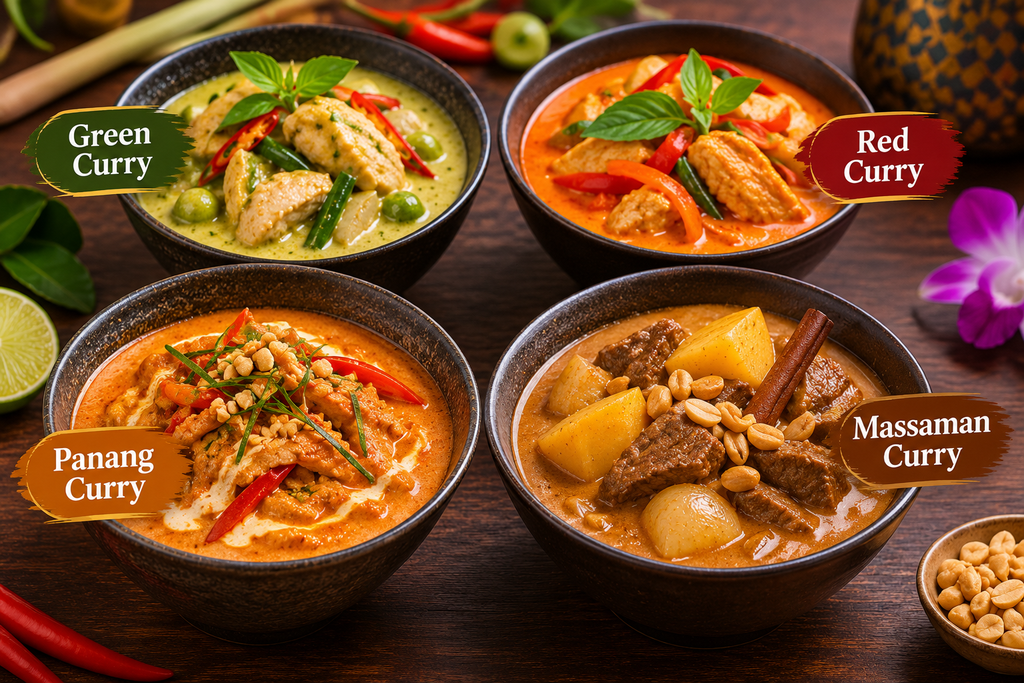
Most people who are familiar with Thai food know the vivid colors of Central Thai curries, such as Green Curry or Red Curry, often served over jasmine rice. Khao Soi belongs to a different tradition altogether, rooted in the cooler, mountainous northern regions of Thailand and deeply influenced by historic trade routes through Myanmar and Yunnan.
Instead of a thin broth or a heavy curry sauce, Khao Soi sits in a velvety coconut curry broth that strikes a middle ground. It is richly seasoned with yellow curry powder, turmeric, black cardamom, ginger, and lemongrass. The turmeric gives the broth its golden-amber hue, while the coconut milk mellows the spice into something smooth and inviting.
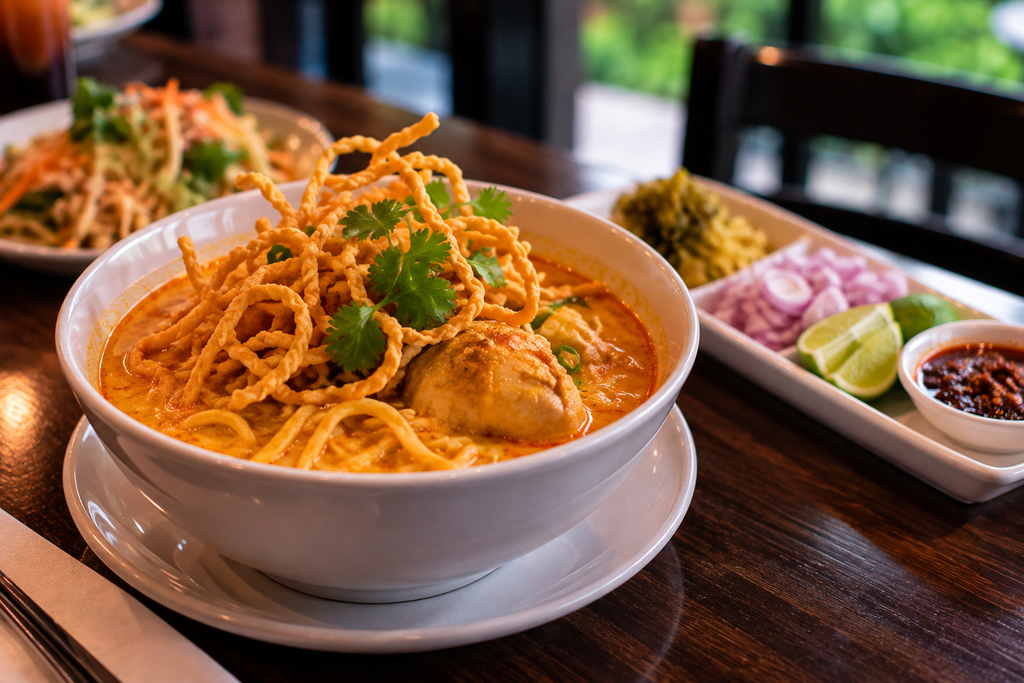
What makes the dish unforgettable, however, is its structure. At the bottom of the bowl lies a nest of broad, tender egg noodles that soak up the spiced curry. Piled on top is a crown of deep-fried, crispy egg noodles. With every bite, you get a contrast between the silky, broth-soaked noodles underneath and the satisfying crunch on top.
Ingredients, Accompaniments, and Flavor Profile
A traditional bowl of Khao Soi is never served alone. It comes with a small tray of fresh garnishes that turn every meal into a personal experience, allowing you to tune the flavors to your exact taste.
Here is what gives the bowl its iconic character:
- The Protein: Tender bone-in chicken leg or thigh is the classic choice, slow-simmered in the curry broth until the meat falls off the bone with the touch of a spoon. Beef or tofu variations are also common.
- The Broth Base: A blend of freshly pressed coconut milk and aromatic red and yellow curry pastes cooked down with fresh ginger and shallots.
- The Crunch: Golden-fried egg noodles piled high, adding structure and soaking up the top layer of broth as you eat.
- The Fresh Garnishes: Raw shallots sliced thin for sharp bite, pickled mustard greens for an earthy sour tang, fresh cilantro, a wedge of lime, and smoky homemade chili oil cooked in pork or vegetable fat.
Squeezing fresh lime over the top is essential. The citrus cuts through the rich coconut milk, while the pickled mustard greens add a bright, sour contrast that brightens every mouthful.
If you want to see how these ingredients come together for a local meal, take a look at the current Menu to explore the options.
How to Eat Khao Soi Like a Local
Eating Khao Soi is interactive. When the bowl arrives at your table, do not jump straight in with your fork or chopsticks.
Start by taking a quick sip of the broth to gauge its natural richness and heat. Next, squeeze your lime wedge over the crispy noodles, then drop in a spoonful of pickled mustard greens and thinly sliced shallots. If you enjoy spicy food, add a small spoonful of roasted chili oil.
Use your chopsticks to lift the soft noodles from the bottom while gently pressing some of the crispy noodles into the broth so they soften slightly while retaining their crunch. Mix everything gently, spooning broth and garnishes together in each bite.
Bringing Regional Thai Flavors to the Smokies
Finding regional specialties like Northern Thai curry noodles outside of major metropolitan areas can be a challenge. In a mountain town known for pancake houses and southern barbecue, sitting down to a steaming bowl of Khao Soi offers a welcome alternative when you want something fresh, complex, and full of character.
Whether you are staying in town for a long weekend or passing through after a trip to the national park, finding a table at The Baht offers a straightforward way to experience these regional flavors firsthand. You can check the Google Location for easy directions and parking information.
Bringing Your Food Journey to the Table
Khao Soi is more than just a quick dinner option. It is a dish shaped by regional history, trade, and a deep appreciation for contrasting flavors and textures. From its fragrant golden curry broth to its crisp noodle topping, it gives you a genuine taste of Northern Thai cooking culture right in the heart of the mountains.
Next time you are deciding where to gather with family or friends after a day outdoors, consider stepping outside your usual ordering habits and experiencing a bowl for yourself.
Frequently Asked Questions
1. What does Khao Soi taste like?
Khao Soi is rich, aromatic, and slightly sweet with a subtle, warming spice base. The coconut curry broth offers deep savory notes balanced by the fresh acidity of squeezed lime and the sharp tang of pickled mustard greens.
2. Is Khao Soi very spicy?
The natural base of Khao Soi is mildly spiced rather than burning hot. Most of the heat comes from roasted chili oil, which is typically served on the side so you can adjust the spice level to your preference.
3. What is the difference between Khao Soi and regular Thai curry?
Regular Thai curries are usually served over steamed jasmine rice and feature a smoother sauce base. Khao Soi uses egg noodles instead of rice and features a combination of both soft and deep-fried crispy noodles in the same bowl.
4. Are wheat or rice noodles used in Khao Soi?
Traditional Khao Soi uses flat, yellow wheat-and-egg noodles rather than the rice noodles commonly found in dishes like Pad Thai or Pho.
5. Where can I find Khao Soi in Gatlinburg?
You can order Khao Soi prepared with traditional ingredients and fresh garnishes at The Baht, located in downtown Gatlinburg.