Opening a Thai menu for the first time often leads to a familiar pause right at the curry section. You see familiar names like green, red, Panang, and Massaman, all simmered in coconut milk with your choice of protein and vegetables. Yet without knowing what goes into the curry paste behind each dish, ordering can feel like a gamble, especially if you are trying to avoid overwhelming heat or searching for a specific balance of sweet and savory flavors. Understanding the main types of Thai curry turns that guesswork into an easy decision, helping you match the right bowl to your palate every time.
What Makes Thai Curry Different?
Unlike Indian curries, which typically rely on toasted dry spice blends cooked slowly with onions and tomatoes, traditional Thai curries start with a wet paste made by pounding fresh herbs, aromatics, and chilies together. Common foundational ingredients across most Thai curry pastes include lemongrass, galangal (a citrusy, peppery rhizome related to ginger), garlic, shallots, kaffir lime peel, and shrimp paste.
Once the paste is fried briefly in oil to release its essential oils, coconut milk is stirred in to create a rich, velvety sauce. The color, intensity, and character of the curry depend heavily on the type and ripeness of the chilies used, along with the addition of toasted spices, nuts, or sweet aromatics.
The Four Essential Thai Curries
While regional Thai cooking includes dozens of distinct curries, four staples appear on nearly every Thai menu in the United States. Each offers a distinct personality in the bowl.
Green Curry (Kaeng Khiao Wan)
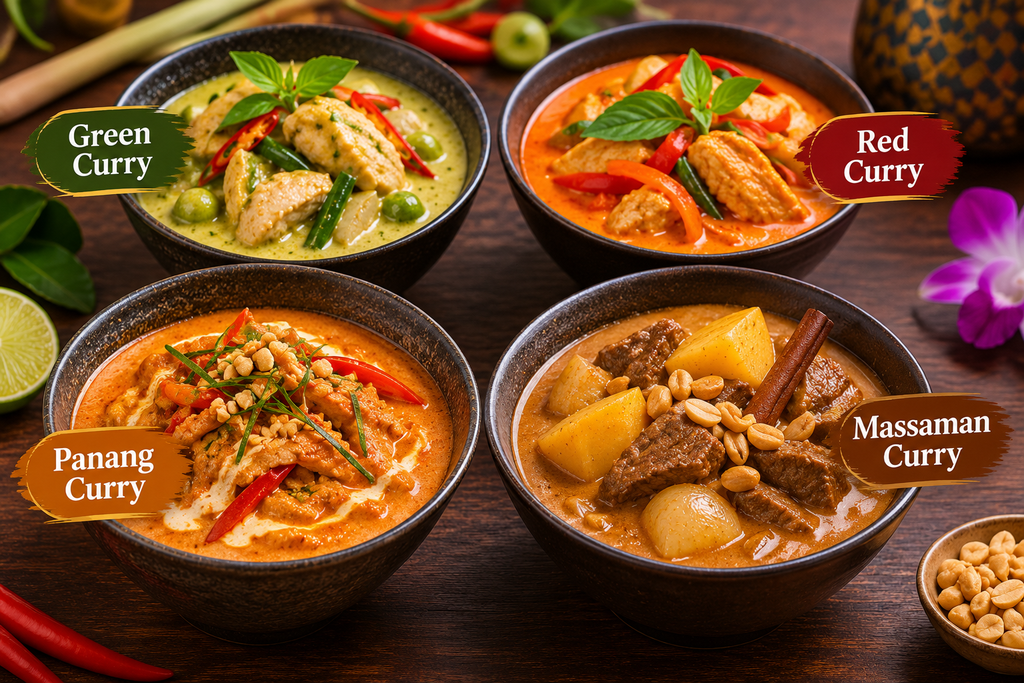
Green curry gets its vibrant hue from fresh green bird’s eye chilies pounded directly into the paste alongside fresh herbs like cilantro roots, sweet basil, and kaffir lime leaves. Despite the word “wan” (sweet) in its Thai name, which refers to its pale, creamy green color rather than sugar content, green curry is traditionally the spiciest of the four major curries.
Its flavor is bright, herbaceous, and lively. Because fresh green chilies bring a sharp, immediate heat, green curry pairs well with tender proteins like chicken or shrimp and crisp vegetables such as bamboo shoots, bell peppers, and Thai eggplant, all of which soak up the fragrant, herbal broth.
Red Curry (Kaeng Phet)
The Thai name for red curry literally translates to “spicy curry,” though in practice, its heat feels warmer and rounder than the sharp bite of green curry. Red curry paste relies on dried red chilies that are rehydrated before pounding. Using dried chilies gives the sauce a deeper, earthier chili flavor and a rich terracotta color.
Red curry is the quintessential all-purpose Thai curry. It balances savory depth with subtle sweetness from coconut milk and palm sugar, making it versatile enough to carry almost any protein, from beef and pork to tofu and roasted duck. If you want a classic, medium-to-bold Thai curry experience without the intense herbal punch of green curry, red curry is a reliable starting point.
Panang Curry (Kaeng Phanaeng)
Panang curry is a close cousin to red curry, sharing a base of dried red chilies, lemongrass, and galangal, but the final dish tastes noticeably richer, thicker, and slightly sweeter. The defining difference lies in the addition of ground roasted peanuts (or peanut butter in some kitchens) blended into the paste, along with aromatic dry spices like coriander and cumin seeds.
Because Panang is simmered down until the coconut milk reduces into a thick, clingy sauce rather than a loose soup, it coats each piece of meat or tofu luxuriously. Its nutty undertones soften the chili heat, placing Panang comfortably in the mild-to-medium range. It is an ideal bridge for diners who enjoy red curry flavors but want something creamier and less brothy.
Massaman Curry (Kaeng Matsaman)
Massaman curry stands apart from the other three because of its historical roots blending Thai ingredients with Persian and Indian spice traditions. Alongside traditional Thai aromatics like lemongrass and galangal, Massaman paste incorporates warm, toasted whole spices such as cardamom, cinnamon, cloves, star anise, and nutmeg.
The resulting sauce is deeply savory, gently sweet, and complex without relying on heavy chili heat. Traditionally cooked with hearty ingredients like potatoes, onions, peanuts, and tender beef or chicken, Massaman is widely considered the mildest Thai curry. If you prefer rich, comforting stews over fiery spice, Massaman offers warmth and depth without burning your palate.
Side-by-Side Comparison: Choosing Your Curry
Comparing these four dishes side by side makes it easier to spot the exact flavor profile you are craving:
| Curry Type | Primary Chilies | Defining Flavor Notes | Typical Texture | General Spice Level |
| Green Curry | Fresh green chilies | Bright, herbaceous, fresh basil, sharp heat | Light, brothy coconut sauce | Medium-Hot to Hot |
| Red Curry | Dried red chilies | Earthy, savory, balanced chili warmth | Medium-bodied coconut sauce | Medium |
| Panang Curry | Dried red chilies | Nutty, rich, subtly sweet, creamy | Thick, reduced, clingy sauce | Mild to Medium |
| Massaman Curry | Mild dried red chilies | Warm spices (cinnamon, cardamom), savory-sweet | Rich, hearty, stew-like | Mild |
Keep in mind that Thai curry spice levels can still vary depending on the kitchen and how you customize your order. Most restaurants prepare curries to order, allowing you to request mild, medium, or hot adjustments even within these traditional profiles.
How to Order Thai Curry With Confidence
When deciding which curry belongs on your table, start by thinking about texture and spice tolerance rather than color alone. If you love bold heat and fresh herbal aromas, go straight for green curry. If you want a comforting, peanut-kissed sauce that clings to jasmine rice, Panang will hit the mark. For newcomers or anyone dining with family members who shy away from spicy food, Massaman provides an approachable, deeply flavorful introduction to Thai cooking.
If you are visiting the Great Smoky Mountains and want to explore these four curries firsthand, you can browse the current offerings on The Baht’s menu, where Green, Red, Panang, and Massaman curries are all available alongside classic noodle and stir-fry dishes. Checking the menu ahead of time makes it easy to compare ingredients, pick your preferred protein, and plan a relaxed meal during your stay in Gatlinburg.
Frequently Asked Questions
1. What are the different types of Thai curry?
The four most common types of Thai curry are Green, Red, Panang, and Massaman. Each gets its distinct color, texture, and flavor profile from a specific paste made of fresh or dried chilies, herbs like lemongrass and galangal, and warm spices simmered in coconut milk.
2. What is the difference between green curry and red curry?
Green curry is made with fresh green chilies and extra herbs like cilantro and basil, giving it a bright, herbal flavor and a sharper heat. Red curry uses dried red chilies, which creates a deeper, earthier flavor and a warmer, slightly milder spice profile.
3. Is Massaman curry spicier than Panang curry?
No, Massaman curry is milder than Panang curry. Massaman relies on warm, aromatic spices like cinnamon, cardamom, and cloves with minimal chili heat, whereas Panang uses a red chili paste base enriched with peanuts for a mild-to-medium kick.
4. What is the mildest Thai curry to order?
Massaman curry is generally the mildest Thai curry on the menu. Its creamy coconut sauce, potatoes, peanuts, and warm baking spices deliver rich, savory-sweet comfort with very little chili heat, making it an easy choice for spice-sensitive diners.
5. What Thai curry options are available at The Baht in Gatlinburg?
The Baht features all four classic options—Green Curry, Red Curry, Panang Curry, and Massaman Curry—on its current lineup. You can view the full dish descriptions and protein choices directly on The Baht’s menu page before ordering or visiting.