Walking into a Thai restaurant for the first time brings an exciting mix of wonderful aromas and an unfamiliar menu. With names that might be new to you and combinations of sweet, salty, sour, and spicy elements, deciding what to order at a Thai restaurant can feel a bit overwhelming. The good news is that Thai cuisine is remarkably adaptable, offering everything from comforting noodle dishes to rich, aromatic curries and light, crispy appetizers.
Understanding how a Thai menu is organized makes choosing your meal straightforward and rewarding. By breaking down the essential categories of Thai cooking, you can easily find dishes that match your comfort level with spice and your preferred flavor profiles.
Understanding the Foundation of Thai Flavors
Thai cooking relies on a harmony of distinct flavor elements. Unlike cuisines that focus on a single dominant taste, a well-prepared Thai dish creates equilibrium between sweet, sour, salty, spicy, and savory notes. Fresh aromatics like lemongrass, galangal, garlic, and fresh basil play a major role in building deep flavor bases without making meals feel heavy.
For beginners, one common misconception is that all Thai food is extremely hot. While chili peppers are an essential ingredient in many recipes, heat is only one component of the overall spectrum. Many traditional preparations are naturally mild, and most kitchens prepare dishes fresh to order, allowing guests to adjust heat levels according to personal preference.
Beginner-Friendly Noodle Dishes
If you are looking for a reliable, deeply comforting entry point, noodle dishes are ideal. They offer familiar textures paired with vibrant, savory sauces that introduce traditional seasonings without overpowering your palate.
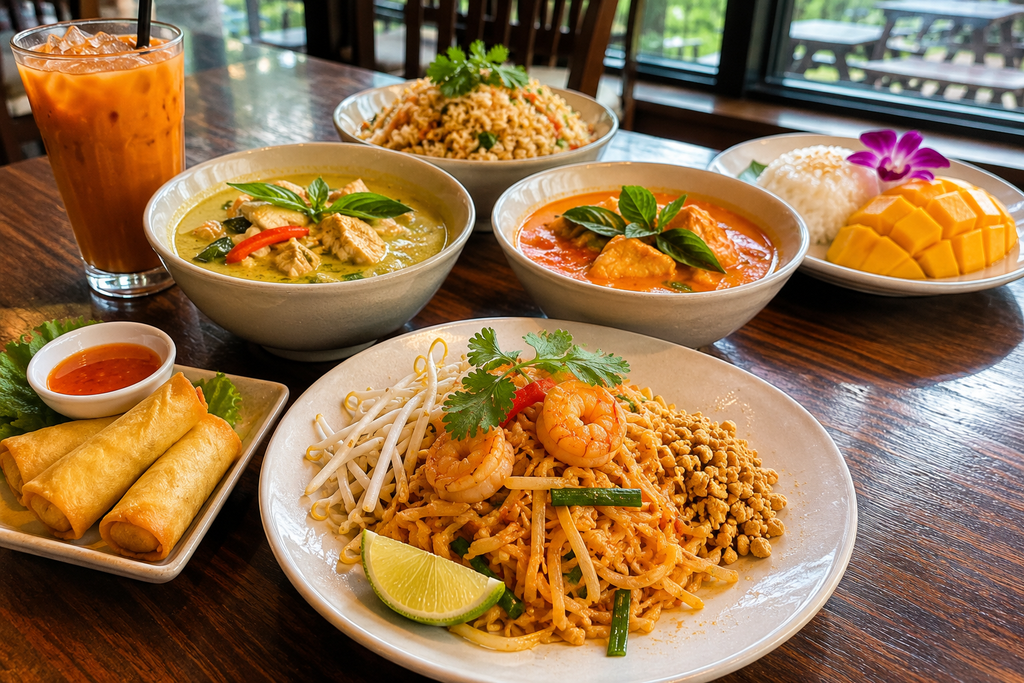
Pad Thai is widely considered the ultimate starting point for anyone exploring Thai food for beginners. Made with stir-fried rice noodles, eggs, tofu or your choice of protein, bean sprouts, and crushed peanuts, it balances subtle sweetness with tangy tamarind notes. It is naturally mild, making it a safe and delicious option for all ages.
For those who prefer wide, flat noodles and rich savory notes, Pad See Ew provides a cozy alternative. Stir-fried with broccoli, egg, and a sweet soy sauce blend, it delivers a smoky depth of flavor with zero chili heat. Exploring a full menu gives you a clear sense of how these noodle classics differ in texture and seasoning.
Exploring Thai Curries and Rice Plates
Thai curries differ significantly from Indian or Middle Eastern curries. Instead of dry spice powders, Thai curries start with fresh pastes made from ground herbs, roots, and peppers, which are then simmered with coconut milk to create a smooth, velvety sauce.
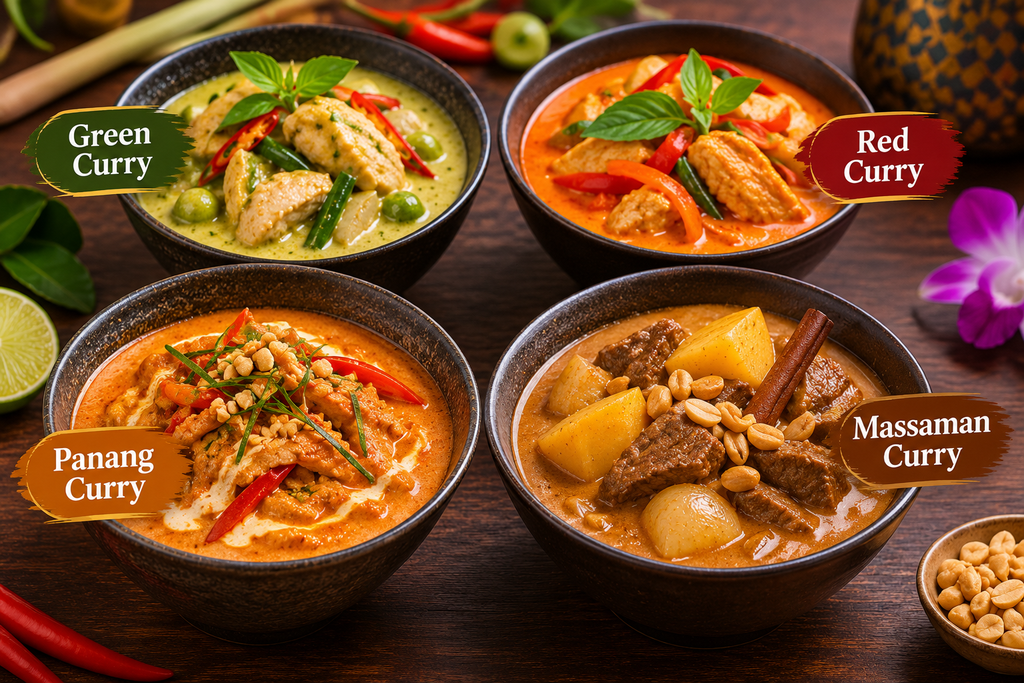
Panang Curry is one of the best mild Thai food options for first-timers. Built on a base of creamy coconut milk, ground peanuts, and fragrant kaffir lime leaves, it offers a rich, slightly sweet profile with gentle warmth. Green Curry, on the other hand, highlights fresh green chilies, Thai eggplant, and sweet basil, offering a brighter and slightly punchier herbs-and-spice profile.
If you prefer stir-fried rice dishes over broths or curries, Basil Fried Rice or classic Thai Basil Stir-Fry (Pad Krapow) pairs aromatic garlic and fresh chili with savory sauces served over steamed jasmine rice.
Refreshing Soups and Appetizers
Starting your meal with small plates or a shared soup is a great way to sample multiple flavor combinations. Appetizers like crispy spring rolls or chicken satay served with peanut dip offer familiar, approachable textures before your main course arrives.
When it comes to soups, two iconic options dominate Thai menus:
- Tom Yum: A clear, hot and sour broth infused with lemongrass, lime juice, kaffir lime leaves, and fresh mushrooms. It is zesty, waking up your senses immediately.
- Tom Kha: A silky, coconut milk-based soup featuring galangal, lemongrass, and lime. The coconut milk tempers the sour and spicy elements, resulting in a smooth, soothing flavor profile.
Tips for Customizing Your Order
When placing your order, do not hesitate to ask questions about spice levels or ingredient adjustments. A welcoming local establishment, such as The Baht, focuses on making your dining experience comfortable and enjoyable. You can check their about us page to learn more about their approach to preparing accessible, authentic dishes.
Here are a few quick tips for a smooth experience:
- Start with a mild spice level if you are uncertain; you can always add extra chili flakes at the table.
- Combine a rich, creamy dish like Panang Curry with a lighter appetizer to balance your meal.
- Order a side of steamed jasmine rice to soak up flavorful curry sauces and balance spicy notes.
If you are planning your visit or want to check location details ahead of time, reviewing the restaurant’s locations page helps ensure a smooth trip.
Frequently Asked Questions
1. What is the least spicy dish to order at a Thai restaurant?
Pad Thai and Pad See Ew are typically the least spicy traditional main dishes. They focus on sweet, savory, and tangy flavor profiles rather than chili heat, making them perfect for beginners.
2. Can I ask for my Thai food to be made non-spicy?
Yes, most Thai dishes are prepared fresh to order, meaning you can request a mild or non-spicy version of stir-fries, noodle dishes, and fried rice.
3. What is the difference between Red, Green, and Panang curry?
Red Curry uses dried red chilies for a moderate heat, Green Curry utilizes fresh green chilies for a bright, herbal spice, and Panang Curry includes ground peanuts and coconut milk for a thicker, sweeter, and milder sauce.
4. Is Thai food suitable for vegetarians or gluten-free diners?
Many Thai dishes can easily be adapted for vegetarian or gluten-free diets by substituting proteins with tofu or vegetables and using gluten-free soy or tamari sauces upon request.
5. What drink pairs best with a spicy Thai meal?
Thai Iced Tea, a sweet and creamy beverage made with brewed black tea, spices, and condensed milk, is the traditional choice because its richness cools down spicy dishes effectively.